- What is Reinforcement Learning?
- Key RL terminology: agent, environment, state, actions, rewards
- Exploration vs. exploitation
- Real-world applications of RL
- RL vs. supervised & unsupervised learning
- Markov Decision Processes (MDP)
- Bellman equations
- Value and policy functions
- Discounting & reward optimization
- Probability, linear algebra & calculus essentials
- Dynamic programming approach
- Monte Carlo methods
- Temporal Difference (TD) learning
- SARSA algorithm
- Q-learning algorithm
- Introduction to Deep Q Networks (DQN)
- Neural networks for RL
- Experience replay & target networks
- Double DQN, Dueling DQN
- Policy Gradient methods
- REINFORCE algorithm
- Actor–Critic architecture
- A2C / A3C methods
- Proximal Policy Optimization (PPO)
- Trust Region Policy Optimization (TRPO)
- Soft Actor–Critic (SAC)
- OpenAI Gym environments
- Custom environment creation
- Using RL libraries: Stable-Baselines3, TensorFlow Agents
- Reward shaping & environment design
- Multi-agent environments
- Robotics control systems
- Autonomous vehicles & navigation
- Finance and trading automation
- Game-playing agents
- Industrial automation & dynamic optimization
- Performance metrics for RL agents
- Hyperparameter tuning
- Training stability & convergence
- Troubleshooting RL models
- Deployment considerations
- Q-learning based project
- Deep RL agent implementation (DQN / PPO / A2C)
- Domain-specific RL application (robotics, trading, or gaming)
- Final project presentation & assessment
- Understanding Workflow Automation
- Evolution from Traditional Automation to Autonomous Systems
- AI-Powered Workflow Concepts
- Autonomous Workflows vs Robotic Process Automation (RPA)
- Business Applications of Autonomous Workflows
- Key Components of Intelligent Workflow Systems
- Benefits and Challenges of Autonomous Automation
- Introduction to Generative AI
- Understanding Large Language Models (LLMs)
- Prompt Engineering Fundamentals
- Context Management and Memory
- LLM Capabilities and Limitations
- AI Decision-Making Principles
- Real-World AI Automation Use Cases
- Workflow Lifecycle Management
- Process Discovery and Analysis
- Business Process Modeling
- Workflow Design Principles
- Defining Tasks and Dependencies
- Decision Trees and Conditional Logic
- Workflow Optimization Techniques
- Introduction to AI Agents
- Agent Architectures and Components
- Agent Planning and Reasoning
- Task Decomposition Strategies
- Multi-Step Execution Frameworks
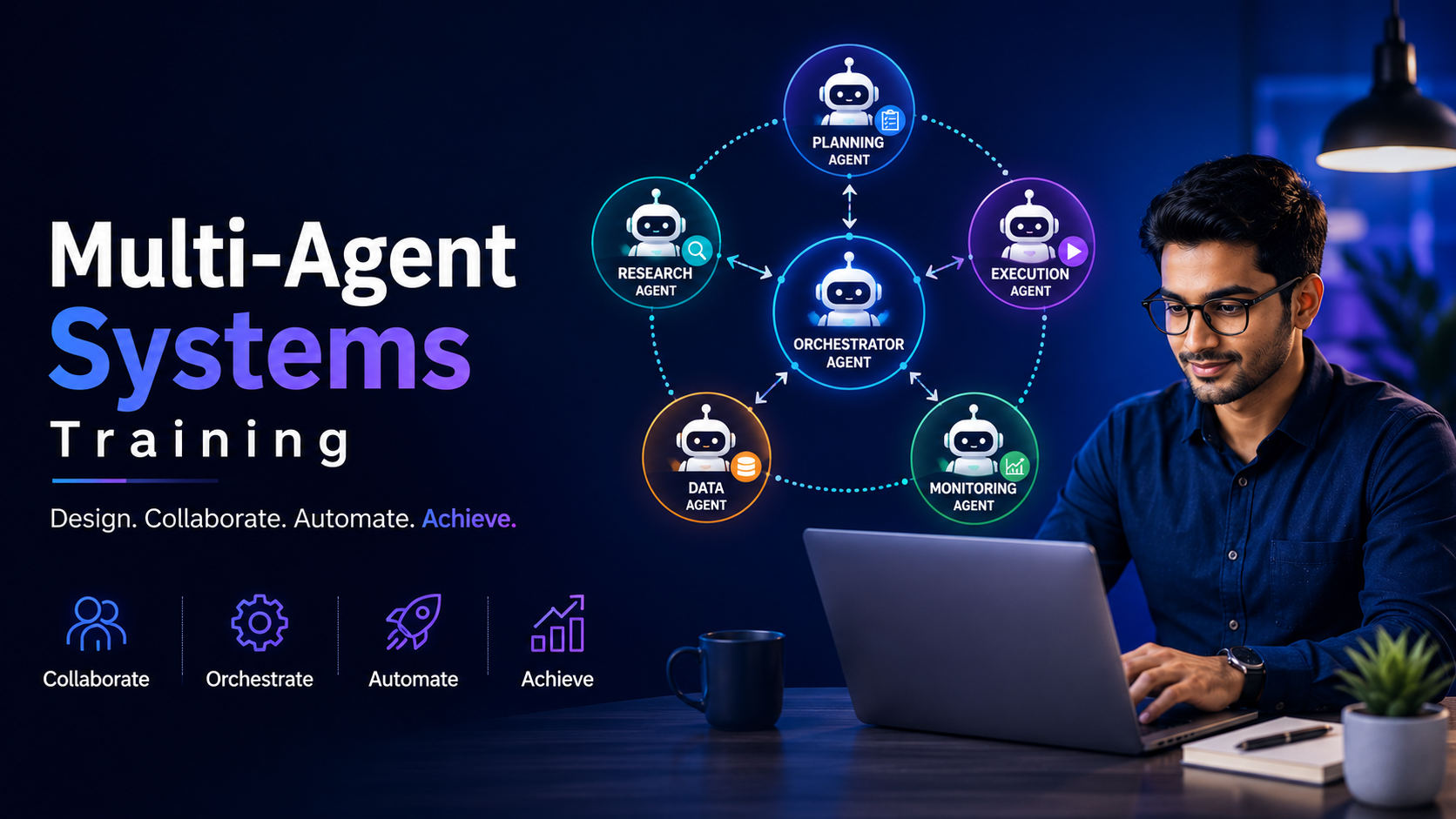
- Agent Collaboration Models
- Human-in-the-Loop Workflows
- Workflow Orchestration Concepts
- Task Scheduling and Execution
- Event-Driven Workflow Automation
- Sequential and Parallel Workflow Execution
- Workflow Coordination Techniques
- State Management and Persistence
- Workflow Monitoring and Tracking
- Introduction to API-Based Automation
- REST APIs and Webhooks
- Connecting External Applications
- Tool Calling Concepts
- Integration with Enterprise Systems
- Database Connectivity
- Third-Party Service Integration
- Data Collection and Ingestion
- Working with Structured and Unstructured Data
- Knowledge Base Integration
- Document Processing Automation
- Retrieval-Augmented Workflows
- Semantic Search Fundamentals
- Context-Aware Decision Making
- Decision Intelligence Concepts
- Rule-Based and AI-Based Decisions
- Workflow Decision Engines
- Context-Aware Automation
- Dynamic Task Assignment
- Adaptive Workflow Execution
- Handling Exceptions and Uncertainty
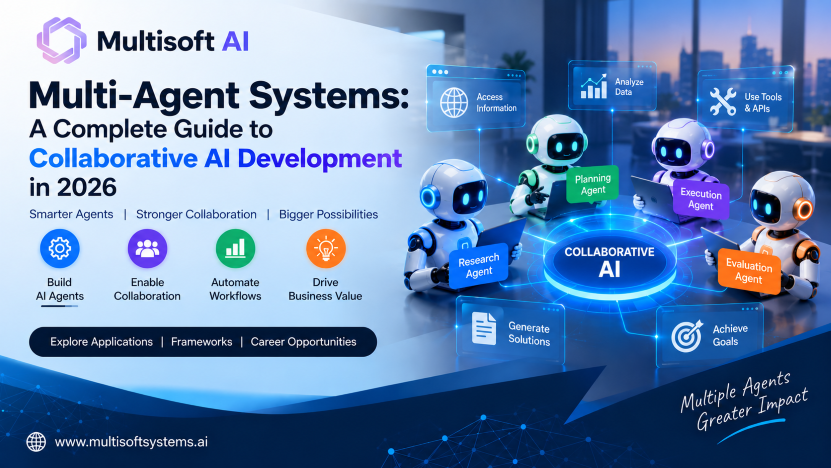
- Introduction to Multi-Agent Architectures
- Agent Communication Mechanisms
- Task Distribution Strategies
- Agent Coordination Models
- Collaborative Problem Solving
- Workflow Handoffs and Escalations
- Multi-Agent Enterprise Use Cases
- Business Process Automation Frameworks
- CRM Workflow Automation
- IT Service Management Automation
- HR and Employee Support Automation
- Finance and Operations Automation
- Customer Service Automation
- Enterprise Knowledge Management Workflows
- Workflow Performance Monitoring
- Logging and Audit Trails
- Governance Frameworks
- Security Best Practices
- Data Privacy and Compliance
- Risk Management in Autonomous Systems
- AI Ethics and Responsible Automation
- Workflow Scalability Strategies
- Performance Optimization Techniques
- Cost Management for AI Workflows
- Resource Allocation and Load Balancing
- Reliability and Fault Tolerance
- Workflow Testing and Validation
- Continuous Improvement Frameworks

 Explore a Multiple AI Tools
 Unlimited Practice Assessments
 Lifetime LMS Access
 Recorded Live Sessions

 Beginner
 Certification